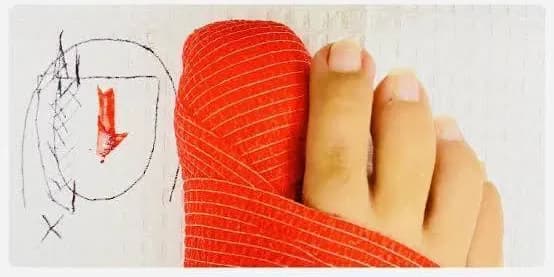
Ingrown toenail: what you can do yourself and when to see a professional
An ingrown toenail happens when the edge of the nail grows into the skin beside it. It is common, it hurts more than its size suggests, and it most often affects the big toe. Caught early, it often settles with simple care. Left alone or treated the wrong way, it can become infected and may need a small procedure. Here is how to tell the difference.
What it looks like
- Tenderness and redness along one or both sides of the nail, especially when you press on it or put on shoes.
- Mild swelling and warmth of the skin beside the nail.
- In later stages: a sharp, throbbing pain, clear or yellow fluid, pus, or a lump of reddish tissue growing over the edge of the nail.
Common causes
- Cutting the nail too short or rounding the corners (the most common cause).
- Shoes that are too tight, narrow or short, or socks that squeeze the toes.
- Injury: stubbing the toe, dropping something on it, repeated pressure from running or football.
- Naturally curved nails, a family tendency, or thick or fungal nails.
- Sweaty feet that soften the skin around the nail.
What you can do at home in the early stage
If the nail is only tender or slightly red, with no pus and no fever, you can try the following for a few days:
- Soak the foot in warm (not hot) water for about 15 minutes, a few times a day. Dry the area gently and carefully afterwards.
- Keep the area clean and dry. Wash daily with mild soap.
- Wear roomy, open or soft shoes and loose socks while it settles. Avoid pointed or tight shoes.
- Let the nail grow. Do not trim the corner shorter. When the nail has grown out past the skin, trim it straight across.
- Use an over-the-counter pain reliever if you need one, following the label.
If it is clearly better in a few days, keep up good trimming habits so it does not come back.
What not to do
- Do not cut or dig out the ingrowing corner yourself. Trying to cut a "V" in the nail, or digging at the edge with scissors or a pin, often leaves a small spike of nail that grows in again, and it can injure the skin and cause an infection.
- Do not tape, pick or tear at the nail.
- Do not put strong antiseptics, acids or home remedies on the skin.
- Do not keep wearing the shoes that caused it, and do not push through pain on a long run or walk.
When to see a podiatrist or doctor
Get professional help promptly if:
- the redness, swelling or pain is getting worse or has not improved after a few days of home care;
- there is pus, drainage, a bad smell or a growth of red tissue beside the nail;
- the toe is very painful, hot or throbbing;
- the nail keeps growing in after you have trimmed it correctly;
- you have a fever, or red streaks spreading from the toe.
If you have diabetes, poor circulation, reduced feeling in the feet or a weakened immune system, do not wait. Even a small ingrown nail can turn into a serious wound in these conditions. Contact your clinician or podiatrist as soon as you notice a problem. A simple routine is described in a daily foot check for people with diabetes.
What a professional can do
A podiatrist or doctor can examine the nail, look for infection and usually relieve the pain in a single visit. Depending on how severe it is, options include:
- carefully removing the small piece of nail that is digging in;
- placing a small splint, brace or packing to guide the nail edge so it grows over the skin instead of into it;
- treating infection, sometimes with antibiotics prescribed by a doctor;
- for nails that keep coming back, a minor procedure under local anaesthetic to remove part of the nail and treat the nail root so that the edge does not regrow.
These treatments are usually quick, and most people can walk out of the clinic afterwards. Your professional will explain what is suitable for you and how to care for the toe while it heals.
How to prevent it coming back
- Trim toenails straight across and not too short. Leave the corners square. Our guide to how to cut your toenails safely shows the steps.
- Choose shoes with room in the toe box, and check fit at the end of the day.
- Do not pull at nails or pick at the corners.
- Keep your feet clean and dry, and change damp socks.
- If your nails are thick, curved or tend to ingrow, have them looked at and shaped by a podiatrist at regular intervals.
This article is general information and does not replace advice from a qualified professional. If you have a specific problem or any warning sign, see a podiatrist or doctor. People with diabetes or poor circulation should seek medical advice early.
Reviewed by Liora Lev, podiatrist and founder of the PODOschool training school.
Disclosure: the podologisrael.co.il directory is owned by the same people who run a private clinic and the PODOschool training school. Listing in the directory is free and is not tied to buying courses.
More guides
- A daily foot check for people with diabetes: a simple 2-minute routine
- How to cut your toenails so they do not grow in
- Podiatrist, podologist or chiropodist: what is the difference?
Podolog Israel home · All guides
Looking for a specialist in Israel? The directory is in עברית, العربية and Русский.