How to cut your toenails so they do not grow in
Ingrown toenails are one of the most common foot problems, and the way you trim your nails is one of the few causes you fully control. A few simple habits make the difference between a nail that grows out cleanly and one that digs into the skin at the side.
Why trimming matters
A toenail grows forward. If the corner is cut off short or rounded into a curve, the skin beside it can fold over the edge, and as the nail grows the sharp corner presses into that skin. The skin becomes red, tender and swollen. Tight shoes, injuries and naturally curved nails add to the problem, but a poor cut is the cause people can most easily fix.
Five steps to a safe trim
- Trim after a bath or shower. Nails are softer and less likely to split or crack. If your nails are very hard, a short soak in warm water first helps.
- Use the right tool. Toenail clippers are larger and stronger than fingernail clippers, with a straight edge. Keep them clean and sharp. Dull or small clippers crush the nail.
- Cut straight across. Do not curve the corners to follow the shape of the toe. Leave the corners visible and square.
- Keep the length right. The nail should reach about the tip of the toe, so that a small free edge remains. Cutting too short removes the protection the nail gives the toe and makes ingrowing more likely.
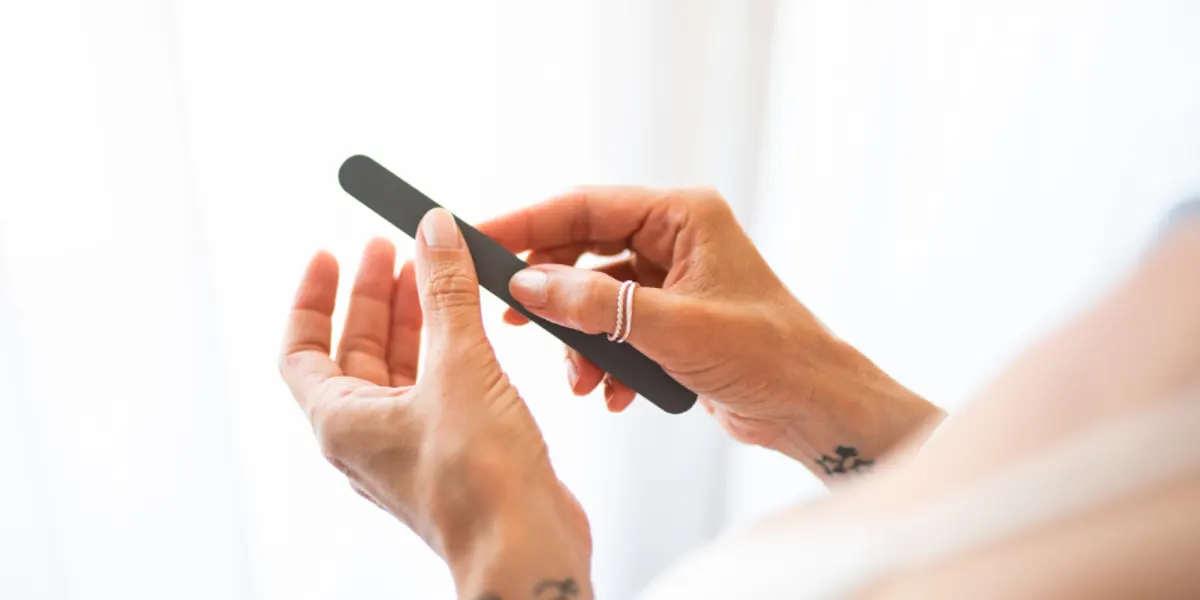
- File the sharp edges lightly. Use a soft nail file, moving in one direction, to take off any sharp points that catch on socks. Do not file the sides down into a curve.
What not to do
- Do not dig into the corners with scissors, pins or other sharp tools, and do not cut a V shape in the middle of the nail. These tricks do not work and are a common way to injure the skin and start an infection.
- Do not tear nails or pull at a loose edge.
- Do not share clippers or files. Sharing tools can spread fungal infections and warts. Wash your tools with soap and water after use, and dry them.
- Do not cut nails when they are very dry and brittle without softening them first.
- Do not ignore pain. A corner that is already tender, red or swollen needs gentle care and, if it does not settle, a professional look.
Shoes and socks count too
Shoes that squeeze the toes press the nail edge into the skin. Choose shoes with enough room across the toes and a roomy toe box, and check the fit at the end of the day when feet are slightly larger. Avoid socks that are too tight or too short.
Looking after your nails between trims
Nail care does not stop with the clippers. Keep your feet clean and dry, and change damp socks, because soft, moist skin around the nail is easier to injure and to infect. Dry carefully between the toes after washing. A little moisturiser on the skin around the nails, but not between the toes, helps keep it supple.
Look at your toenails each time you trim them. Notice the corners, the colour and the thickness, and any redness in the skin beside the nail. Catching a small change early is far easier than dealing with a painful one. For children and older adults, it helps to have a parent, partner or carer check the nails regularly, because it is easy to miss a problem you cannot see or reach.
Who should not trim their own nails
Some people are safer having toenails cut by a podiatrist or another trained professional:
- people with diabetes, reduced feeling in the feet or poor circulation, where a small cut can turn into a slow-healing wound (see a daily foot check for people with diabetes);
- people who cannot see or reach their feet comfortably;
- people with thick, deformed, discoloured or fungal nails, which are hard to cut safely;
- people whose nails keep growing in despite careful trimming;
- anyone taking medicines that thin the blood or weaken healing, who should ask their clinician.
A podiatrist can thin thick nails, shape them correctly, deal with an early ingrown edge and advise on footwear.
When to see a professional
See a podiatrist or doctor if the skin beside a nail is red, swollen or painful and does not improve in a few days, if there is pus or drainage, or if you have diabetes and notice any new nail problem. Do not wait for it to get worse. If a corner is already sore or growing in, read ingrown toenail: what you can do yourself and when to see a professional.
This article is general information and does not replace advice from a qualified professional. If you have a specific problem or any warning sign, see a podiatrist or doctor. People with diabetes or poor circulation should seek medical advice early.
Reviewed by Liora Lev, podiatrist and founder of the PODOschool training school.
Disclosure: the podologisrael.co.il directory is owned by the same people who run a private clinic and the PODOschool training school. Listing in the directory is free and is not tied to buying courses.
More guides
- A daily foot check for people with diabetes: a simple 2-minute routine
- Ingrown toenail: what you can do yourself and when to see a professional
- Podiatrist, podologist or chiropodist: what is the difference?
Podolog Israel home · All guides
Looking for a specialist in Israel? The directory is in עברית, العربية and Русский.